Analog Bag
What is an Analog Bag? Your Complete Guide to Screen-Free Living
You know that urge to grab your phone when you're bored? An analog bag gives you something better to reach for. It's just a tote with coloring pages, puzzles, a book, whatever keeps your hands busy. Here's how to build one.


An analog bag is a tote or pouch filled with screen-free activities like books, puzzles, and coloring pages — designed to replace phone scrolling with something more satisfying.
It started with a TikTok. A creator shared her solution for doom-scrolling: a small tote bag filled with crossword puzzles, watercolors, and knitting supplies. She called it her "analog bag." The video went viral.
Since then, Google searches for "analog hobbies" are up 1,300%. Michaels reports searches for analog crafts increased 136% in six months. The Cambridge Dictionary even added the term: an analogue bag is "a bag filled with activities such as knitting or books to help someone use their smartphone less in their free time."
But here's what most articles about analog bags miss: it's not really about the bag. It's about understanding why you reach for your phone in the first place, and giving yourself something better to reach for instead.
What Exactly is an Analog Bag?
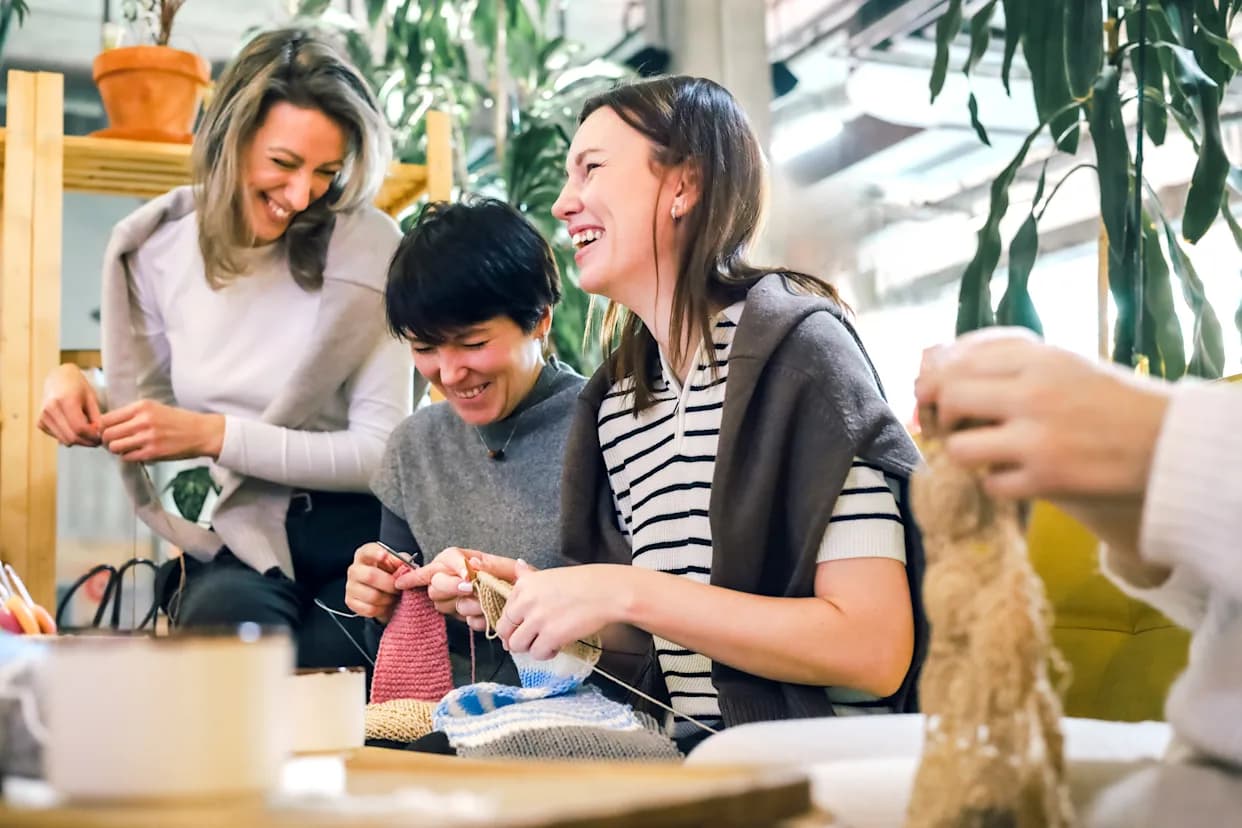
An analog bag is a portable collection of screen-free activities you keep with you throughout the day. Think of it as a physical alternative to your phone — something you can grab when you feel the urge to scroll. The "analog" part refers to non-digital activities: things you do with your hands that don't involve screens. Coloring pages, crossword puzzles, knitting projects, journals, books, card games. Anything that occupies your attention without notifications, algorithms, or infinite feeds. The "bag" part is literal. It's a tote, pouch, or backpack pocket dedicated to these activities, kept somewhere accessible — by your couch, in your work bag, or in your car. The key is making analog activities as easy to grab as your phone.
Why It Works
- Gives you a physical alternative when the urge to scroll hits
- Portable — works at home, at cafes, during commutes, in waiting rooms
- Customizable to your interests (no one-size-fits-all)
- No willpower required once it's set up
Why Analog Bags Actually Work (The Science)
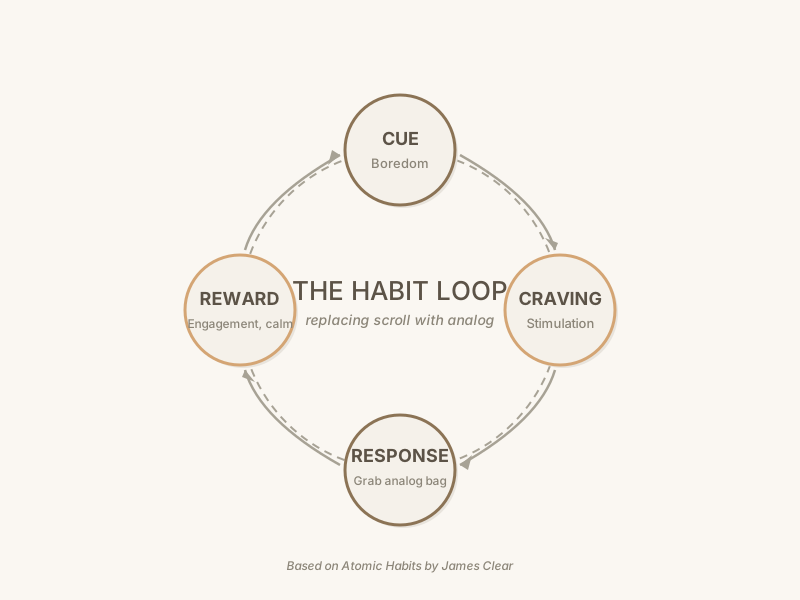
Here's what James Clear explains in Atomic Habits: every habit follows a loop of Cue → Craving → Response → Reward. When you're bored (cue), you crave stimulation (craving), you pick up your phone (response), and you get a dopamine hit from new content (reward). The problem? You can't just remove a habit. You have to replace it. Telling yourself "don't check your phone" doesn't work because it leaves the craving unsatisfied. You need a different response that delivers a similar reward. That's exactly what an analog bag does. Same cue (boredom). Same craving (stimulation). Different response (grab the analog bag). Similar reward (engagement, satisfaction, something to do with your hands). The research backs this up. A Harvard study of 93,000 people found that those with hobbies reported better health, more happiness, and fewer depression symptoms. Creative activities like coloring have been shown to lower cortisol levels (the stress hormone) in just 20 minutes.
Key Insights
- Habit replacement is more effective than habit elimination
- Hands-on activities satisfy the same craving as scrolling
- Creative hobbies reduce cortisol and anxiety
- Physical objects create "friction" that breaks automatic phone-checking
What to Put in Your Analog Bag
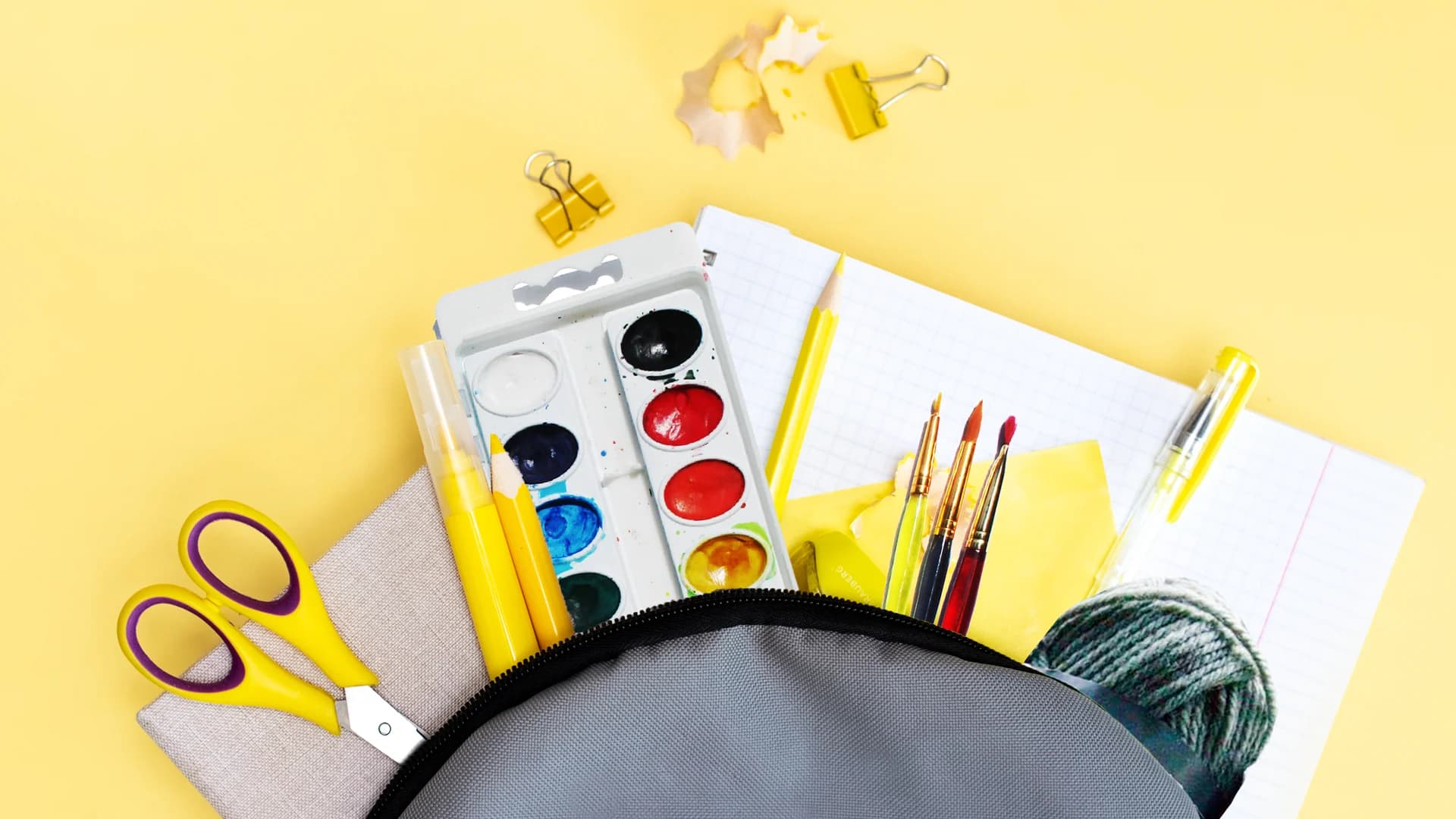
There's no "right" way to fill an analog bag. The best items are ones you'll actually use — not what looks good on TikTok. Here are categories to consider: Creative Activities Coloring pages, watercolor sets, knitting or crochet projects, cross-stitch kits, sketchbooks. These work because they keep your hands busy while letting your mind wander or focus. Start with something low-skill if you're new — adult coloring pages are perfect because there's no learning curve. Mind Games Crossword puzzles, sudoku books, word searches, a Rubik's cube, portable chess. Great for waiting rooms or commutes. They engage your brain without overstimulating it. Reading Material A paperback book, magazine, poetry collection, or e-reader (Kindle counts — it's single-purpose). The key is choosing something you want to read, not something you feel you should read. Journaling A blank notebook, gratitude journal, or prompted journal like "A Question a Day." Writing by hand processes thoughts differently than typing. Even five minutes of stream-of-consciousness journaling can reset your mental state. Social Games A deck of cards, Uno, travel-sized board games. Perfect if you want to disconnect with someone rather than alone. Retro Devices An iPod Classic, a Gameboy, a film camera, or a dedicated MP3 player. These single-purpose devices let you enjoy music, games, or photography without the pull of notifications. There's something satisfying about a device that does one thing well. (See our guide: Why Your Analog Bag Needs a Dumb Device.)
Pro Tip
Start with just 2-3 items. You can always add more later, but an overstuffed bag becomes another source of decision fatigue. Pick one thing from the "creative" category and one from "mind games" — that covers most moods.
How to Build Your First Analog Bag (4 Steps)
Step 1: Use a Bag You Already Own You don't need to buy anything. A canvas tote, a zippered pouch, an old backpack pocket — anything works. The analog bag trend isn't about consumerism; it's about using what you have. The original viral analog bag was just a simple tote. Step 2: Start With 1-2 Activities Pick one thing you know you enjoy and one thing you're curious about. Maybe a sudoku book (familiar) and a small watercolor set (new). Don't overthink it. You'll swap things out as you learn what actually gets used. Step 3: Put It Where You'd Normally Grab Your Phone This is the crucial part. Your analog bag needs to be more accessible than your phone, or you'll default to the easier option. By the couch. On your nightstand. In the front pocket of your work bag. Wherever your hand automatically reaches when you're bored — that's where the analog bag lives. Step 4: Try It for One Week Commit to reaching for the bag instead of your phone for just one week. Notice what you actually use. Notice what stays untouched. Adjust accordingly. Some people discover they love crosswords; others find them tedious. There's no wrong answer.
Key Principles
- No new purchases required — use what you have
- Start small to avoid overwhelm
- Placement matters more than contents
- One week is enough to know if it's working
What's in My Analog Bag (Personal Share)
I've been using an analog bag for a few months now. Here's what actually stays in rotation: A paperback book — Currently rotating between fiction and non-fiction. The physical weight reminds me it exists in a way my Kindle app never did. An iPod Classic — Yes, really. Loaded with albums I actually want to listen to, not algorithmic playlists. There's something about choosing an album and committing to it that streaming killed. (More on why retro devices work.) A self-care journal — The kind with daily prompts like "What's one thing you're grateful for?" or "What would make today great?" Takes 5 minutes and genuinely shifts my headspace. Printed coloring pages — I download them from this site, print a few, and toss them in with some colored pencils. Perfect for when I want to do something with my hands but don't want to think too hard. What's not in my bag anymore: the knitting project I optimistically added (never touched it), the "important" book I felt I should read (swapped for one I actually wanted to read), and the fancy watercolor set (too much setup for casual use).
Real Talk
Your analog bag will evolve. What sounds good in theory often doesn't survive contact with real life. Give yourself permission to remove things that aren't working — that's not failure, it's data.
Common Mistakes (And How to Avoid Them)
Mistake 1: Overpacking A bag stuffed with 15 activities becomes its own source of stress. You open it, feel overwhelmed by choices, and grab your phone instead. Keep it minimal — 3-5 items max. Mistake 2: Buying Everything New The analog bag isn't a shopping list. Most people already own books, notebooks, and pens. Raid your house before buying anything. The goal is less consumption, not more. Mistake 3: Choosing "Should" Activities Filling your bag with things you think you should do (learn a language, read classics, master calligraphy) instead of things you actually enjoy. If it feels like homework, you won't use it. Fun is the point. Mistake 4: Expecting Perfection You'll still check your phone. Some days you won't touch your analog bag at all. That's fine. The goal isn't zero screen time — it's having an alternative when you want one.
Final Thoughts
An analog bag isn't magic. It won't cure your phone addiction overnight. But it does something important: it gives you a choice.
Right now, when you're bored, your only option is your phone. It's always there, always accessible, always ready to fill the void. An analog bag creates a second option — one that leaves you feeling calm instead of drained, satisfied instead of hollow.
The creator who started this trend didn't set out to start a movement. She just wanted to stop doom-scrolling. The fact that millions of people resonated with her solution says something about where we are collectively: tired of our phones, but unsure what else to do.
The answer, it turns out, is simple. Fill a bag with things you enjoy. Keep it close. Reach for it instead.
Start today. Grab a tote. Add a book and a printable sudoku puzzle. Put it next to your couch. See what happens.
Your phone will still be there when you're done. But you might not miss it as much as you thought.
Get More Screen-Free Ideas
Join our newsletter for weekly analog activity ideas, free printables, and mindful inspiration.
No spam. Unsubscribe anytime.
Sources
- Analog bags: Reduce your screen time and pick up a creative hobby - Good Morning America
- Original Analog Bag TikTok Video
- New Words: Analogue Bag - Cambridge Dictionary Blog
- Having a hobby tied to happiness and well-being - Harvard Health
- Anxiety and stress can be lowered through colouring - The Conversation
- The Habit Loop - James Clear