Analog Bag
Light Phone III Review (2026): The $899 Anti-Smartphone
What owners actually report after living with the Light Phone III — what it fixes, and the three frustrations that come up again and again. The honest verdict, and who the $899 anti-smartphone is really for.

The Light Phone III asks a real question: can a $899 device that cannot run a single app actually replace your smartphone? Not for a weekend experiment, but for work, parenting, and getting lost in an unfamiliar city. This review pulls together spec details, long-term owner reports, and the recurring themes from people who have made it their only phone.
I wanted to know the thing the spec sheets can't tell you: not what the Light Phone III does, but what it's actually like to live with. Because the marketing promises calm, and most reviews either gush about the philosophy or rage about the missing autocorrect. The truth sits in between, and it's more interesting than either.
Here's the short version up front, since you're probably deciding whether to spend the money: the Light Phone III is the best-built minimalist phone I've used, it genuinely reduced how often I reached for a screen, and there were three specific moments it made my week harder. Whether those moments are dealbreakers depends entirely on who you are — and by the end of this review you'll know which side you're on.
This is a companion to our broader minimalist phone comparison; here I'm going deep on just this one device.
What the Light Phone III Actually Is
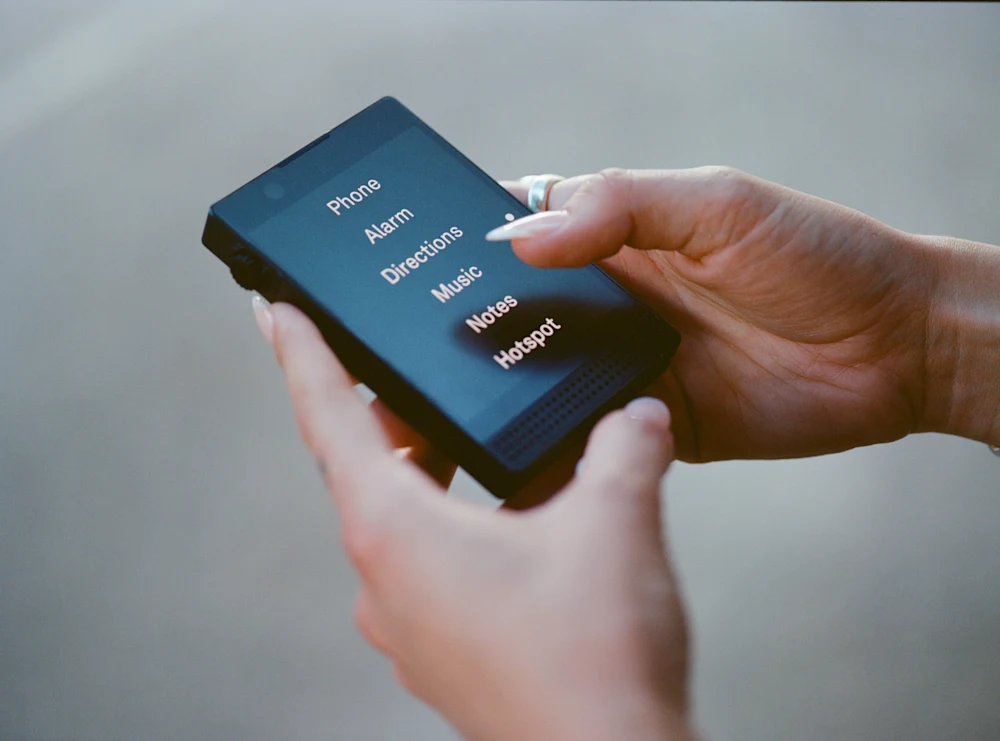
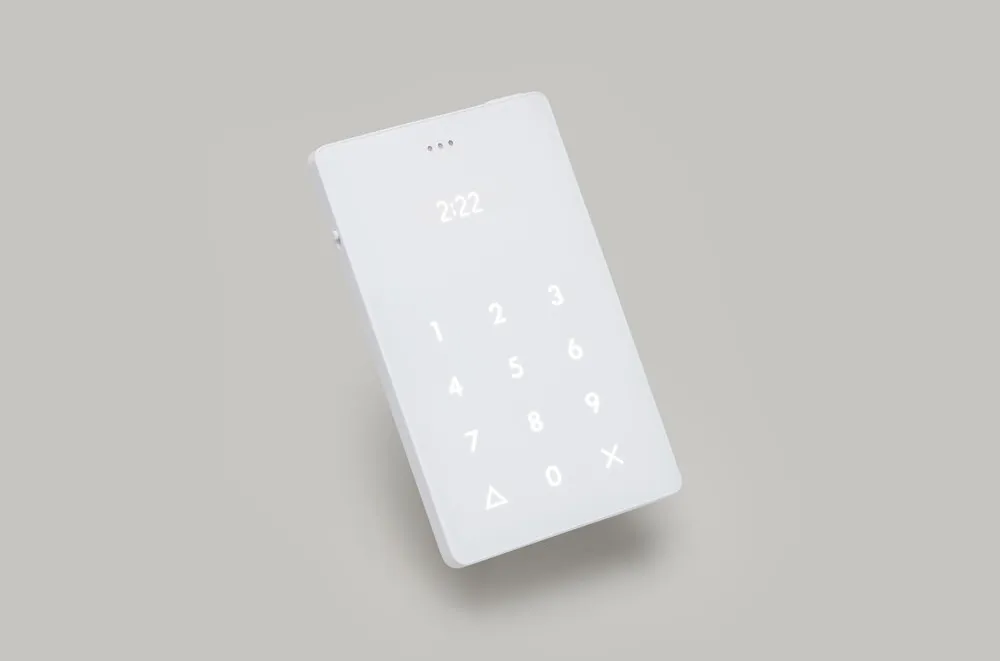
The Light Phone III is a 'go light' phone — a deliberately limited device designed to be used as little as possible. It has a 3.92-inch matte AMOLED touchscreen, a metal frame, a replaceable battery (genuinely rare in 2026), USB-C, 5G, and a fingerprint reader. On paper, modern hardware. What it doesn't have is the entire point: no app store, no browser, no email, no social media, no algorithmic anything. Instead you get 'tools' — Light's word for the handful of built-in functions: phone, messages, directions, a basic camera, an alarm, a calculator, notes, and a music/podcast player. Light adds new tools over time through software updates, on their schedule. The interface is black text on a near-black screen. The home screen shows the time and a short vertical list of those tools. That's it. There is nothing to discover, nothing to scroll, nothing that lights up to pull you back. After years of phones engineered to maximize 'engagement,' the emptiness is startling — and that's clearly the design intent.
The Specs That Matter
- 3.92-inch matte AMOLED touchscreen — modern, not a flip phone
- Replaceable battery and USB-C (rare and repairable)
- 5G on all major US carriers
- No app store, browser, email, or social media by design

What Genuinely Works (The Calm Is Real)
Let me start with the thing that surprised me: the effect kicked in within 48 hours. By day two I'd stopped the phantom reach — that reflexive grab for a phone that isn't even buzzing. There was nothing to reach for. No feed, no inbox, no notifications stacking up. My hand would find the device, register that it offered nothing, and put it back. The build quality genuinely justifies part of the price. The III feels like a premium object — dense, cool to the touch, with a satisfying physicality the plastic dumb phones can't match. The matte screen is easy on the eyes and readable in direct sunlight. Directions work better than I expected. Turn-by-turn navigation got me through a city I'd never driven in without a single wrong turn. And calls and texts — the things a phone is supposedly for — are crisp and reliable. The deepest change was social. At dinner, on walks, waiting in line, I was there. Researchers call the cost of a present-but-idle phone 'attentional residue'; a 2017 University of Texas study found the mere presence of your smartphone drains cognitive capacity even when it's face-down and silent. Removing that pull, not just silencing it, is the whole proposition — and on that promise, the Light Phone delivers.
Why It Helps
- The 'phantom reach' reflex faded within 48 hours
- Premium, repairable build that feels worth handling
- Reliable turn-by-turn navigation
- Genuinely more present in conversations and downtime
Where It Wins
If you mostly want a phone to stop interrupting your real life — meals, walks, work focus — this is where the Light Phone III shines brightest. The calm isn't marketing; it shows up fast.

The Three Moments It Made My Week Harder
Honesty time. Three specific things went wrong, and you should weigh them before spending $899. One: texting. There's no Google-grade autocorrect and no swipe typing. Long messages are a slog, and owners repeatedly describe sending shorter, blunter replies just to be done. If you're a heavy texter, this friction is constant, not occasional. Two: the WhatsApp wall. The Light Phone has no WhatsApp, which means being cut out of any group chat your circle runs on. The most common story from owners is a plan quietly reorganized in a thread they never saw. In much of the world, no WhatsApp means no social logistics. This is the single biggest dealbreaker for most people. Three: the camera. It exists, and that's about the kindest thing I can say. It's fine for a quick visual note; it is not for capturing a moment you care about. Owners consistently mention missing photos they genuinely wanted, and that it stung more than expected. None of these are bugs. They're the deliberate gaps that make the phone what it is. The question is whether your life has room for them.
The Honest Drawbacks
- No autocorrect or swipe typing — heavy texters will struggle
- No WhatsApp, which breaks group-chat logistics for many
- Camera is a basic visual note, not a real camera
- These are deliberate gaps, not flaws to be patched
A Quick Gut-Check
Before you buy: list the three things you do most on your phone right now. If WhatsApp, fast texting, or photography is on that list, read the next section carefully — an alternative might fit you better.
Battery, Daily Life & the $899 Question
Battery life lands at a comfortable two days of real use — not the week you'd get from a Nokia, but far beyond a smartphone, precisely because there's no background app churn. Most owners report charging every other night without hitting empty. The replaceable battery also means this phone can last years, not until the sealed cell degrades. Day to day, the rhythm changes. You plan more. You text someone 'meet at the corner at 6' instead of pinging live locations. You print or memorize directions as backup. It's a small reversion to how phones worked in 2009 — and mostly, that's the point, not a hardship. Now the price. $899 is a lot for a phone designed to be used less. You can get 80% of the digital-detox benefit for free by putting your current phone in grayscale with a minimalist launcher — I walk through exactly how in our minimalist smartphone guide. What the Light Phone adds over that free route is the thing willpower can't fake: it's physically incapable of betraying you at 11pm. For some people, that hard wall is worth every dollar. For others, it's $899 of friction they could have installed for nothing.
Why It Helps
- About two days of battery on real-world use
- Replaceable cell means a multi-year lifespan
- Forces light planning that mostly feels good, not painful
- The hard 'can't betray you' wall is the real value over free fixes
| Aspect | Verdict | Notes |
|---|---|---|
| Build | Excellent | Premium metal, replaceable battery |
| Calm / focus | Excellent | Effect within 48 hours |
| Texting | Frustrating | No autocorrect or swipe |
| None | Biggest dealbreaker for most | |
| Camera | Poor | Visual notes only |
| Value | Depends | Worth it only if free fixes failed you |
Who Should Actually Buy It
Best for: people who've already tried grayscale and willpower and know it isn't enough — who need the device itself to be incapable of distraction. Not worth it for: anyone who hasn't yet tried the free route, or who needs WhatsApp and a real camera.
Our pick
Light Phone III
Light
Worth it for one specific person: someone whose phone keeps hijacking their real life, who has already tried grayscale and launchers and found willpower wasn't enough.
Check price at LightLinks marked with an arrow are affiliate links — if you buy through one we may earn a commission, at no extra cost to you. It never changes what we recommend, and we don't earn anything on the other phones listed here. Prices are checked against each maker's own store.
Final Thoughts
So, is the Light Phone III worth it? After three weeks, my honest answer is: it's the best at what it does, and what it does won't suit most people — and both of those things are true on purpose.
If your problem is that your phone interrupts your real life and you've already tried the free fixes without success, the Light Phone III is close to perfect. The calm is real, it arrives fast, and the hardware is built to last for years. The hard wall against distraction is something no app or setting can replicate, and for the right person that's worth $899.
But if you need WhatsApp, text heavily, or care about photos, this phone will fight you every day in ways that have nothing to do with focus. You'd be paying a premium for friction in the wrong places.
My recommendation: before you buy the Light Phone III, spend one week with your current phone in grayscale and a minimalist launcher. If that's enough, you just saved $899. If you finish the week still betraying yourself at midnight, you've found the one buyer this phone is genuinely made for — and you'll love it.
Get More Screen-Free Ideas
Join our newsletter for weekly analog activity ideas, free printables, and mindful inspiration.
No spam. Unsubscribe anytime.